If you’ve got a case of the Mondays, you might want to watch this awesome video of Broken Bells performing “And I Love Her” with Ringo Starr, or, more accurately, with a mashup of vintage Beatles footage that was piped through an ancient television set. Not quite a 1964 Ed Sullivan sensation, but still an awesome 21st-century take on a classic tune.
Lucius Ladies

I went to see You Won’t at The Independent on Friday, and I left a devoted fan of Lucius. If I’m honest, I was so excited to see You Won’t that I didn’t bother to research the headliner. Boy, was that a mistake. Jess Wolfe and Holly Leassig, the ladies of Lucius, are perfectly paired both visually and vocally. Playing up a sisterly vibe, the two came onstage with matching hair, makeup and costumes–all of which were working on every level. So well, in fact, that the fellas of You Won’t opened their set wearing farcical wigs in imitation of their perfect blonde bobs.
Wolfe and Leassig both graduated from the Berklee School of Music, a pedigree that can be heard in the intelligent way they merge an irresistable 1960s doo wop sound with layered western strength and folk friendliness, all wrapped up in a Heart (as in 1980s girl wonder band Heart) bow. Combined with Danny Molad, Peter Lalish and Andrew Burri, Lucius delivered a performance by which the litany of shows left to be seen this year will measured. At one point, the audience–which had been incredibly respectful for the entirety of the show–lost its mind, and collectively gave the loudest and longest applause I’ve ever heard at The Independent. As a nod to this show of respect, the ladies snuck into the center of the crowd and performed a graceful rendition of “Two of Us On the Run,” a fitting end to a lovely night.
After quickly congratulating Josh Arnoudse of You Won’t on a great show, I walked away from the venue in search of an Acme burger with a You Won’t t-shirt shoved into my coat pocket and a copy of Wildewoman on vinyl snugged protectively under my arm. Divisadero Street was wet with rain, and pockets of the bar-bedraggled clogged the sidewalk. As I waited to cross the street, I smirked a little in acknowledgment of this rare and beautiful night–the kind of night that started with no expectations and then blew my mind. Thank you, Lucius and You Won’t, for an unforgettable experience filled with wind chimes and harmonies. Travel safe and stay golden, Pony Boy(s).
Entertainment vs Ethics: The James Brown-Woody Allen Paradox
Sometimes disparate experiences collide to form an opinion or, at the very least, some thoughts pop out. A recent viewing of the amazing documentary Muscle Shoals as well as CNN’s The Sixties -The British Invasion prompted me to further my oldies education. Today at work, I listened to the entire catalog of The Animals and The Rolling Stones, after which I realized that a) I knew many of the songs by heart without realizing it, and b) I’m a dumb-dumb for not already owning all their albums on vinyl. I also listened to a lot of James Brown as a result of this assignment to myself, which brings me to my thoughts on experiential collisions.
To begin with, I will plainly state: James Brown is one of the greatest, most influential performers EVER. If you saw the Super Bowl Half-Time Show this year, then you already know this since Bruno Mars would cease to exist if James Brown had never happened. I point this out because I’m somewhat annoyed by this fact: instead of kids getting amped about James Brown, they’re watching a watered-down version that lacks the raw magnetism of the authentic source. That said, the national treasure that is James Brown had a checkered criminal past and was repeatedly arrested for domestic violence. This puts people who enjoy his music in a tough spot, particularly if you’re a feminist-leaning music journalist like Moi. As I began ruminating on this quandary, my brain inevitably stopped the Thinking Train at Woody Allen Station.
If you don’t Twitter, access the internet regularly or occasionally partake in the TV news, Woody Allen is (again) at the center of a child molestation scandal courtesy of his Ex, Mia Farrow, and selected members of her/his adopted/biological brood. I don’t want to get into the particulars here, but you can read Robert B. Weide’s article published on The Daily Beast if you want a thorough examination of the case. As with James Brown, this revelation makes me squeamish. Woody Allen’s writing of and Diane Keaton’s portrayal of Annie Hall in the film of the same name changed my life. In Annie Hall I found a lovably awkward, tomboyish lifestyle guru that encouraged me to go with the crazy and accentuate my eccentricities. Blazers, hats and ties became and still are my wardrobe staples, and I encourage all new bosom buddies to watch Annie Hall in order to understand me on a deeper level.

Respecting James Brown’s rightful position as the Godfather of Soul and loving Woody Allen for gifting me a respectable role model (when compared to, say, any character played by Marilyn Monroe), how do I reconcile right with wrong? Logically, I should abhor them if they beat their wives and sexually assaulted their kids, respectively (and, ehrm, allegedly). Following this reasoning then I, as an ethical person, should be unable to watch Annie Hall or listen to “It’s A Man’s, Man’s, Man’s World” without dry-heaving in disgust. But it’s not that simple, is it? We’re part of a much larger societal dynamic that glosses over bad behavior if the offending individual is also really good at entertaining us (R. Kelly anyone?). As one good buddy put it, “Every time I listen to Ike Turner I can see him slap Tina in the face, but his music is just so damn good!”
So what do we do? For now, I have more questions than answers. I can tell you that I read “I Wear The Black Hat” by Chuck Klosterman–an entertaining examination of why we forgive some people and crucify others for the same or similar malfeasance. In it, Klosterman delves into the collective psychology of these situations utilizing insightful prose laden with a heavy dose of black humor like only Klosterman can. The conclusion he eventually reaches is that “over time, the public will grow to accept almost any terrible act committed by a celebrity; everything eventually becomes interesting to those who aren’t personally involved.” I don’t feel good about this rationale, but I understand it because it is true. Truth is hard to uncover from situations in which we aren’t directly involved, and, sometimes, even the ones that we are. It’s unclear what Woody Allen did or did not do because the waters are muddied by powerful emotions, and we weren’t there to know the facts. James Brown pleaded guilty to battery, but in this world of 24-hour news coverage we are too savvy to blindly accept a confession or a conviction as the final word on guilt because the system is broken and things are never quite what they seem.
Despite myself, I will always watch Annie Hall when life has kicked my ass, and I’m fast becoming one of the most prolific viewers of James Brown videos on You Tube. This might make me a bad person, I don’t know. If it does, then please know that I’m just a soul whose intentions are good. Oh Lord, please don’t let me be misunderstood.
An Optimist, A Pessimist: You Won’t in San Francisco
Playing The Independent this Friday is a two-person outfit called You Won’t that you will like, I promise. Well…as long as you’re into the earnest indie vibe. Hailing from Boston, this combination of bffs Josh Arnoudse on guitar/vocals and Raky Sastri on percussion produces infections acoustic folk rock that instantly caught my attention.
Skeptic Goodbye, the duo’s 2012 debut released by Old Flame Records, could not be better titled. Every time I push play on this album I’m transported to another place, a better place–one floating on a nostalgic accordion ebb and flow. I find it impossible not to bounce about in my chair as associative images rattle about my personal unconscious–lakeside tire swings, battered back-of-the-bar pianos, and Edison lights crisscrossed along the horizon of a winter-crisp city street. Each song seamlessly transitions into the next without losing its own unique character. Skeptic Goodbye opens with “Three Car Garage,” a precocious track that immediately catches the listener’s attention. In songs like “Old Idea,” the tempo is perfectly paired with the lyrical mood while the eclectic harmonium prevents a simple song from being simplistic. In fact, these fellas consistently call upon a creative assortment of instruments like the melodica, the saw, and even wind chimes throughout the album. Finally, they cap the effort off with the satisfying song “Realize”, a contemplative piece filled with reverence and wonder.
Perhaps what I like most about the music of You Won’t is how it lends itself to relational memory, how something created by another can so easily feel like my own–so easily be the personal soundtrack that was seemingly always present yet fresh enough to incite a creative rush. In this sense, Skeptic Goodbye is both a blanket and a bombshell banishing boredom (often the root of skepticism) in a comforting cocoon. These kids have fun, they’re funny, and if we follow their lead they may just make optimists of us all.
Word on the street is that their shows have converted skeptics like NPR’s Bob Boilen, so I’m giddy with excitement to experience the album live. Hopefully you are too, and I’ll see y’all on Divisadero this weekend!
Sleater-Kinney and the Feminist Fist

For many of my music loving brethren, an older sibling played a pivotal role in their musical development. This left me, an only child, at an effervescent disadvantage. Luckily my Motown-loving Father and folk-favoring Mother gave me a solid foundation, but they did nothing to help me branch into my own decade. In this vacuum, I had to rely on the older neighbor girl who introduced me to The New Kids on the Block instead of The Talking Heads–a band I would much prefer to cite as my gateway musical drug.
It wasn’t until high school that I truly began to diversify thanks to chain record stores and the older brother of my first boyfriend. Remember, this was a pre-internet age that Apple hadn’t yet iTransformed; you actually had to leave the house and moderately interact with other humans (if only at checkout) in order to peruse new and old releases. For a shy, awkward teen girl with overprotective parents (again, only child) I did not often find myself alone in public, EXCEPT for places like The Warehouse and Best Buy* where Mom would let me run around and explore to my heart’s content while she attended to her own business. It was in places like these that I stumbled across Modest Mouse and Built to Spill, two of my favorite bands of all time and the opening dialog with my future boyfriend’s incredibly cool older brother.
This fella, to whom we shall refer as J, was a recent high school grad who had just joined the U.S. Marine Corps. He was a man of few words who read Bret Easton Ellis novels and wore a lot of black. I was awe struck, not sexually speaking (I want to get that out of the way) but rather in the way that only kids are always looking for surrogate sources to brothers and/or sisters. It sounds creepy, but it’s not; this is not a Single White Female situation. To some extent, solo kiddos such as we are unsocialized and ever grateful for a little guidance. Having just delved into the Kerouac literary catalog while clutching every Modest Mouse album I could find close to the chest, I was ripe for a cultural infusion J was only too happy to provide. What he loaned me were the aforementioned Ellis novels as well as CDs ranging from Cab Calloway to The White Stripes, all of which I greedily burned and played to death.
This is when J gave me the gift of Sleater-Kinney in all their Riot grrrl glory. For those who are unfamiliar, the Riot grrrl movement was partially incubated in Olympia, Washington, where Carrie Brownstein and Corin Tucker–founding Sleater-Kinneyians–were attending Evergreen State College in the early 1990s. Often associated with third wave feminism, Riot Grrrl music gave women an outlet in a typically male dominated punk realm as grrls lyrically unleashed taboo topics such as rape, patriarchy and domestic abuse without apology. In her book “Words + Guitars: The Riot Grrl Movement and Third-Wave Feminism”, Hilary Belzer explains how the movement sought to develop mediums that spoke to girls who were “tired of boy band after boy band, boy zine after boy zine, boy punk after boy punk…BECAUSE a safe space needs to be created for girls where we can open our eyes and reach out to each other without being threatened by this sexist society and our day to day bullshit.”
If you think about it, this motive is not dissimilar to the socio-educational rhetoric of the mid- and late-1990s. Everywhere I turned, parents and teachers were discussing how I felt and where I stood. Do girls feel comfortable raising their hands to speak their minds in co-ed classrooms? Are girls athletic programs given as much play as boys? We were given Murphy Brown and Title 9 to look to, but by rioting these grrrls spoke to an undercurrent that could never have been mainstreamed on television screens or in legislation. For me, grrrls like Brownstein and Tucker spoke of being sold out to and sucked in by teenage hormones–a predatory right of passage that often floated boys adrift on a testosterone tidal wave of conquest but just as often left girls with a handful of shiny placations, gemstones we thought were diamonds but revealed themselves to be nothing but paste. This is the dynamic that makes a promiscuous football player a legend and the equally adventurous cheerleader a slut on a high school campus, but I had never thought about that before listening to Sleater-Kinney’s eponymous album. MIND BLOWN.
Songs like “A Real Man,” “How To Play Dead,” and “Sold Out” turned my teenage angst into a feminist fist, and continue to resonate with me albeit in a different tenor. Sleater-Kinney is no longer on the road, except for one glorious reunion show of my dreams late last year where they shared the stage with Pearl Jam, and Carrie Brownstein is probably more recognized wielding a heavy dose of irony on Portlandia than she is for wielding a guitar. We grow up and things change. However, the beauty of aging is self awareness, and the falling away of the fog that causes young girls to thrash about in feminist fatigues. This is not to say that I am any less a feminist, but rather that I prefer to speak softly and carry a big stick. Instead of locking myself in my room, hitting play on Sleater-Kinney and writing terrible poetry about future things I hadn’t quite grasped, I pour myself a glass of wine, cue up the same album on Spotify and write about the things I remember. BECAUSE I know my voice has value. BECAUSE the space I write in is paid for by my own labor. BECAUSE now I’m old enough to know it’s the grrrl that makes the riot, and not the riot that makes the grrrl.
*This past Christmas, I wanted to buy my little cousin CDs I had loved when I was his age in an attempt to be for him the sherpa I never had. Not knowing my surroundings well, I opted to patron a Best Buy–the place I had purchased a vast majority of my CDs when I was a tween. Almost as soon as I walked through those automated doors a pit formed in my stomach: “I bet they don’t sell CDs anymore,” I said to myself. Technically, they do still sell CDs but it’s a random assortment of nothing anyone wants to buy. And as I rummaged through the pitiful, multi-genre chaos…I felt old.
Major Francis Velaard Abell
In October of 1940, while a sergeant, Francis Abell was assigned to duty with a mobile recruiting station that operated out of a trailer equipped with cooking and sleeping facilities for three grown men. These men toured Oakland, wooing young fellows and fillies into the service just in time for World War II.
A veteran of World War II and the Korean War, Francis was buried in the San Francisco National Cemetery after his death on December 27th, 1982.
Lieutenant Colonel Christos A. Abramopoulos
Greek immigrant Christos Abramopoulos graduated from medical school in 1913, and honed his specialization in pathology and surgery at a public hospital in Kansas City until 1916. Then, when the U.S. finally entered the world war raging in Europe, this member of the National Guard was deployed to Fort Riley, also in Kansas. He went to France with a surgical unit, returning stateside in 1919 to set up his medical practice in the Phelan Building in downtown San Francisco.
After marrying Catherine Kaplanis on May 1st, 1921, the couple purchased their home at 886 25th Avenue in San Francisco’s Richmond District where they would raise four children. When world again dove into war, Dr. Abramopoulos answered his adopted country’s call for the second time, after which he retired with the rank of Lieutenant Colonel. This father of three first-generation American sons who also served in times of war died on November 26th, 1960, and is buried in the San Francisco National Cemetery, beside his wife.
For more information on Lieutenant Colonel Abramopoulos, as well as some fantastic family photographs, please visit the San Francisco Greek Historical Society’s website.
Current Obsession: Hurray for the Riff Raff

I would argue Blues is the most important American contribution to the lexicography of music; it added a layer of complexity to Country, and beget Rock and Roll. Born from the hell of slavery and its aftermath, the Blues are weighted with the trauma of poverty and loss or, perhaps more accurately, never-having. It is true sadness seeking song for solace, and when you think of it that way the moniker of “Blues,” gives the music and its origins short shrift. I guess the “Tragic Despairs” or the “Depressions” didn’t have the same ring.
We are a nation of immigrants, a nation of blue blood mixing with the denim-coverall-DNA of the blue collar in a melting pot.* Such a mixed bag, pardon the metaphor swap, is bound to create tension, persecution, as the Haves battle the Have Nots because the beast of social democracy wills it so. This unequal distribution is why Blues came to be and why it remains relevant. The musicians who struggle somewhere in the middle (as so many of us do) and voice this in song continue to interpret this American genre in loving homage. Sometimes, for some people, the Blues just feel right; sometimes we all sing the blues in response to daily traumas, be them little or big.
Enter Hurray for the Riff Raff, the brainchild of a Alynda lee Segarra–a Puerto Rican living in New Orleans by way of the Bronx. This July, the Riff Raff signed to ATO Records which is the New York City label founded by Dave Matthews that was also smart enough to sign the Alabama Shakes. Their album My Dearest Darkest Neighbor, my current obsession, is a little bit country textualized by blues swaddled in a tradition of folky pop. It is as sumptuous as it is spare, and has the simple integrity of a Brumby rocking chair: comforting, sturdy, and American to its core. Two of my favorite tracks are actually covers that offer new perspective on classic songs, such as John Lennon’s “Jealous Guy” and the often-tackled traditional folk ballad “Cuckoo.” For a 26-year-old lady to add soul to an icon, and a new angle on a tune that’s been part of the American fabric for over a century is impressive and utterly captivating. This is a woman of import, and a band worth following; here’s looking forward to more to come.
*Except that melting pot metaphor we were spoon fed in school doesn’t really fly because it implies we all simmer into a single identity, that of the American, when in actuality our demographics are more akin to a mixed salad, the collegiately preferred term, where each ethnicity adds to the flavor palette in a recognizably unique way. Cute, right? If only this were as harmonious of an existence as it sounds. The truth is that some ingredients inevitably fall to the bottom and drown in dressing never to be tasted, left behind for disposal. In an overly flippant way, that is what happens to the scores of tired, poor, and huddled masses (to borrow from Emma Lazarus and Lady Liberty) who understand Blues just by being alive.
Taking the Internet to Task
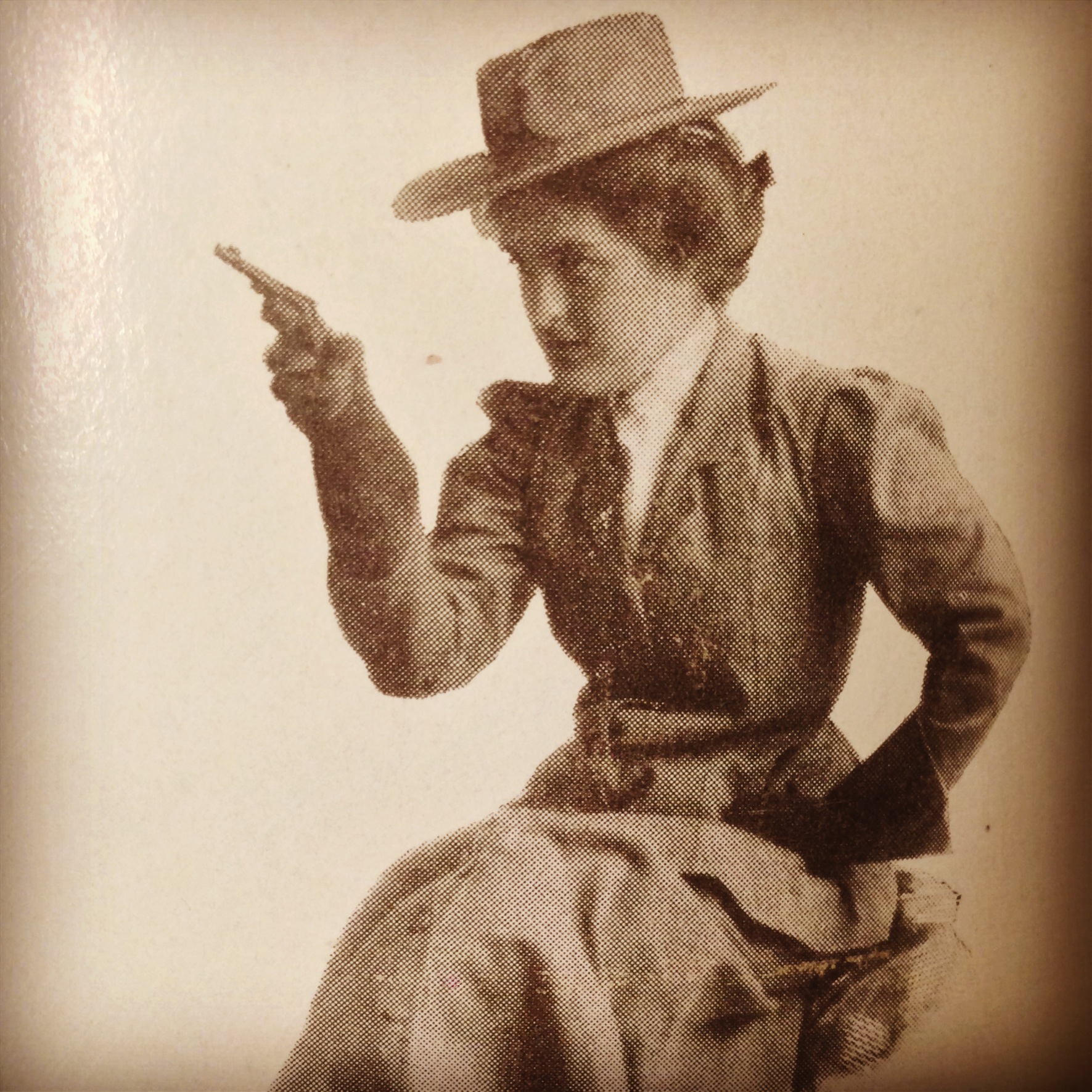
Let’s call a spade a spade. A writer’s promotion of his/her writing is an incredibly narcissistic act because it signals their belief that their opinions are worth merit, worth your time, worth a permanent place in type set into mankind’s artistic chronicle. “I am a delicate snowflake, here is my flurry; you’re welcome” could be the dedication of many books, particularly those of an autobiographical nature. That said, I am a reluctant blogger. As a freelance writer of the 21st-century it’s the best tool to expand my “brand” by showcasing my ability to use words good, defining my artistic eye and promoting my sense of music in conjunction with Twitter and Instagram. However, by expanding my online presence I’ve exposed my unique insights to copyright infringement and plagiarism I’ve not the resources to combat, and unintentionally invited internet creepers to send me emails in which they call me “Little Girlie” and ask to view and share lewd photos (a real thing that really happened). The internet is as disgusting as it is enlightening, as much a resource as is it a source for distraction and is also the ultimate manifestation of narcissism in many ways. Facebook, Foursquare, Google+, Path, Pinterest, SoundCloud, Tumblr, Vine: nobody is interesting enough to create and divide content on that many platforms.
Part of my beef with blogging is the preponderance of uneducated and uncritical posts. To clarify, I don’t use “uncritical” to mean lacking in criticism but rather to pinpoint synthetic contributions to the stream. Generating blank content such as uploading a photograph or inputting a quote without context or discussion only adds to the barrage of unexplained crap on the internet and serves as yet another superficial layer through which one must sift in order to find something worth reading or viewing. Too many sound-bytes, not enough polyphonic sound. Perhaps a more disturbing trend is the democratization of the role of critic. Whereas I’ve clearly benefited from this, I’ve also often said any asshole can have a blog, and in lieu of credentials many bloggers feel the need to savagely attack whatever it is they’re reviewing. Be it music, literature, art or movies, they break their subject down to build themselves up, mistakenly assuming a soap box and an authoritative tone produce the sum of a critique. I ask, for what purpose? I don’t want to read about an album or book that sucks, I want to be turned on to works that will give me chills and send me reeling onto the next thing inspired and engaged.
This opinion was solidified after watching a friend’s band solicit album reviews from music blogs. One such blog (which shall remain nameless) would review any band that paid them with writers who were “hired” merely because they left 100+ comments on the site. This band was given a review that was artless, cruel and untrue–that went through the album song by song to note why each one sucked, and gave no further information on the artist outside of that one album. In addition, the site made no mention that the review had been written in exchange for money. That is not a review, it’s an un-researched 3rd Grade essay without a hypothesis that conceals its ulterior motive. Clearly I’m biased towards and protective of my buddy’s band, but I’ve also reviewed albums semi-professionally and know a farce when I see it. This type of jury-rigged scholarship void of professionalism is described perfectly by Noam Chomsky in his observations on Twitter from the recent book Power Systems: “If you look at [tweets], they have a fairly consistent character. They give the impression of being something that someone just thought of…If you thought for two minutes, or if you had made the slight effort involved in looking up the topic, you wouldn’t have sent it.”
I’ve attempted to counteract (or at least not add to) these problems with this blog in a few ways. First, this site offers no paid content. Just as James Franco recently quantified his own process at a Commonwealth Club event in San Francisco, I merely attempt to understand certain forms of art through other forms of art–literature as an instrument of music, philosophy as a photographic lens, and so on and so forth–as a holistic approach to understanding my world, offering no answers merely unpaid observations. Second, I’ve added a brief biography in the margins to note an academic background and provide professional footing. While this makes me vulnerable to the aforementioned creeps, content written in anonymity engenders no confidence from the reader. If nothing else, I want my relationship with you, kind reader, to be genuine so the trade-off is worthwhile to me. Third, I do not write negative posts. The blogosphere and more traditional media outlets are already screaming with negativity and I see no need to turn up its volume; instead, I want to change the channel to something that has tickled my fancy and hopefully will do so to yours. At the core of this is the fact that I am neither a musician nor a filmmaker, not a baker, not a painter, and far be it for me to identify flaws in a song or a bundt cake I couldn’t dream of making.
Unchecked content, however, is not my only issue with the internet and its derivatives. In addition to his thoughts on Twitter in Power Systems, Chomsky talks of an “atomization” in today’s society. As we increasingly channel our efforts into online communities, our earth-bound relationships are suffering. We connect better with avatars than we do with the faces that sit beside us on the bus, and we are measured not by what we say in a job interview but by how well our LinkedIn account is formatted. Selfies have seemingly become more relevant and revelatory than the Self outside the computer, which is ironic considering the backbone of online communities is often anonymity as every Tom, Dick and Harry register blogs that thrive on sensationalism and unsupported facts. There’s a name for this: it’s called Yellow Journalism.
These fears are not my sole property. What technology is doing to us and has done to us is widely studied, and the dearth of reputable, intellectually stimulating content in popular culture is bemoaned by every generation from Lincoln’s time to our own. Perhaps it’s motivated by a fear of change, or maybe just the human tendency to bitch about our present because misery loves company. Whatever the reason, poets and scientists alike are fascinated by the fluctuating intricacies of human interaction–hence the writing of poetry, hence the practice of psychology (which are two sides of the same coin, really). The universality of the fears expressed in this piece became more real to me after reading the poem “Emerging” from Pablo Neruda’s Extravagaria (1974):
“A man says yes without knowing / how to decide even what the question is / and is caught up, and then is carried along / and never again escapes from his cocoon; / and that’s how we are, forever falling / into the deep well of other beings; / and one thread wraps itself around our necks, / another entwines a foot, and then it is impossible, / impossible to move except in the well— / nobody can rescue us from other people.
It seems as if we don’t known how to speak; / it seems as if there are words which escape, / which are missing, which have gone away and left us / to ourselves, tangled up in snares and threads.
And all at once, that’s it; we no longer know / what it’s all about, but we are deep inside it, / and now we will never see with the same eyes / as once we did when we were children playing. / Now these eyes are closed to us, / now our hands emerge from different arms.”
This, I suppose, is why I blog in the face of internet stalkers and the stigma of irresponsible blogging. Obviously, there are a plethora of brilliant bloggers and internet entrepreneurs who have used online tools to great effect, and have bettered the world because of it; thank goodness they were given the opportunities afforded by online marketplaces. This post is not meant to discount them, it is merely an attempt to offer my observations, state some of my fears and start a dialogue. For I fear binary numbers are usurping words, and the sterile future this fact implies is very scary to me. When we devalue the impact of words we shatter the importance of language as it’s used to communicate with members of our community–the one in which we move by day and not the one we fabricate by night while in the privacy of our shuttered homes. Anonymity afforded online breeds nothing good, and avatars with unspecified agendas hold no one accountable and bring nothing new to the table. In this vacuum of accountability, the social contract is subverted and we enter a realm fabricated from haphazardly connected content that does not foster ingenuity, which is the product of shared ideas of merit. Instead, it often leads to bickering fueled by a neoliberal obsession with profit in its most potent forms: fame or fortune. God, who’d want to be, God who’d want to be such an asshole.
So…my name is Nicole Meldahl, this is my blog and I wrote this piece while listening to “Bukowski” by Modest Mouse. Discuss.
Current Obsession: Hip Hatchet
I’ve whiled away the past two weeks to the tune of Joy and Better Days by Hip Hatchet. This album instills cravings–a want for creaky floorboards in the lonely painted bar frozen in a moment on the cover and a whisky on the rocks to match. My particular favorites are the the fifth and sixth tracks “Sing Me a Reprise” and “Misdirected Man,” the latter of which has a GoPro video featured below.
 Nostos Algos