Portugal. The Man is “So American”

To further illustrate the everlasting impacts of historic events on popular culture is this Portugal. The Man Take Away Show recorded in Paris, France. Aside from the latent choice of performing a song titled “So American” in a foreign country (such an American thing to do), this is a legacy song that synthesizes decades of U.S. history. In deconstructing the song critically, we see specifically American tropes and challenges highlighted in under four minutes.

Jesus Christ enters the song first and points to the country’s foundation as a Christian escape from religious persecution; to this day, the country that emblazons its currency with “In God We Trust” while bestowing religious institutions with tax-exempt status struggles to separate Church and State. This is immediately followed by a shout-out to rock and roll, the instantly identifiable American genre and possibly one the greatest American contributions to music. Music, in and of itself, is no stranger to religion and is used heavily in church to reinforce the gospel. Gospel and Blues, when viewed as secular genres both rooted in slavery, beget Rock and Roll, and although Jesus didn’t know no rock and roll it’s interesting that this type of music has been exalted by many to religious status as a supplement for religions that had alienated them. Take, for example, Rockabilly teenagers who craft their entire existence around a movement that had its moment in the 1950s. That type of immersion takes a religious devotion, and offers the same sense of belonging as that of a worshipping community within traditional brick and mortar churches. This sense of community, I believe, is the essential lure of religion today.

Next up is the Vietnam War, the watermark of American shame. During this conflict, American G.I.s were sent into foreign jungles to quash a civil war so as to prevent the spread of communism into the American sphere of influence. Sound like the logic of a deranged lunatic? That’s because it was; it was the result of many men infected by Red Fever enacting the Domino Theory in which they had been politically raised and would dominate American politics throughout the Cold War. And what did those GIs bring with them to Vietnam? Rock and roll. The domestic impact of the Vietnam War, fueled by anti-war songs, occurred in tandem with the general unrest of the 1960s that included, among other events too numerous to list, the Civil Rights Movement and the assassination of not one but two Kennedys.

In retrospect we must ask ourselves that which Portugal. The Man implores: is there madness in us all? Did we inherit this chaos as vegetables soak up chemicals from the soil? The entirety of the 1960s and 1970s seems anathema to American values, as does the institution of slavery (ironically, perpetuated by direct descendants of persecuted Christians) when viewed with the perspective afforded 21st-century citizens. We were raised to revere the American flag because it stood for liberty, equality and justice for all, but once we grew into our critical thinking skills we were left to wonder: who broke the rules, and where are we supposed to turn when the policemen don’t even understand?

So, you see, this Portugal. The Man song truly IS so American. It’s a conscious rebuttal to the past that ends with the nullifying “There’s two eyes for every one of us, but somebody got there first and took them all.” Americans are aware of their sins, but unable to atone for them because they cannot see through the haze of the past. This isn’t our fault, either, because the ability to see, our crucial sense of sight has literally been taken away from us by those who broke the rules, obfuscated the truth, and smiled while they did it.

No wonder we’ve all gone mad.
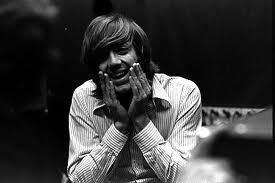
Farewell, Ray Manzarek (1939-2013)

Ray Manzarek

The Doors were my first true experiential rock love. I drew Jim Morrison’s face on everything while my contemporaries were doodling Marvin the Martian. Being a sheltered suburban teen, Morrison’s sexuality was challenging and mystic, and Manzarek’s keystrokes were demonically cool. But cool in an approachable way because they sprang from and complimented Morrison’s crooning, which made their music more attainable for a tyke like me as opposed to jam bands that sputtered out impressively obscure psychedelic guitar goobledygook that I can appreciate now but had no hope to then.

So here’s to you, Ray: the genius behind The Doors who was eclipsed by a less talented lethario who had the good fortune of dying young. Your image may not be emblazoned on lunch-boxes and T-shirts the world over, but the historical narrative of your genre will treat you far more kindly in…The End.

Rest In Peace, brother. Thank you for being the professor that ignited the fervor of my ongoing music education.

Nostos Nic’s Picks: Week of 5/20/2013

Playing Cafe du Nord, Monday, 5/20/2013.

Playing Cafe du Nord with Jeremy Messersmith, Monday, 5/20/2013.

Playing Great American Music Hall, Tuesday, 5/21/2013.

Playing the Elbo Room, Wednesday, 5/22/2013.

Brick & Mortar Music Hall, Thursday, 5/23/2013.

Playing Great American Music Hall, Thursday, 5/23/2013.

Playing Slim’s, Thursday, 5/23/2013.

Playing Slim’s with The Detroit Cobras, Thursday, 5/23/2013.

Playing Cafe du Nord, Friday, 5/24/2013.

The Black Angels Source

Every time I listen to The Black Angels I immediately think of that scene in Apocalypse Now where Willard stares at the ceiling fan and we instantly know it’s a metaphor for helicopter blades, because it always is when talking about Nam. I blame my Undergrad thesis for this.

I was majoring in History, emphasis in 20th-century American, when the new millenium began. While I don’t regret choosing this major, I eventually took issue with the way history is traditionally studied, which is restrictive as opposed to the way students within the Humanities analyze the cause and effect of the world as it’s been given. Hindsight is 20/20. Which brings me back to my thesis and it’s failure.

Well, not failure: I swung a B+, but until that point I had only ever aced papers. You see, I couldn’t restrain myself to mere historical interpretation; I had to explore the Vietnam War in relation to the cultural. This, I believe, is the only responsible way to weigh the scope of history. Studying the historical narrative using only dates and broadly defined movements is insufficient if you cannot view it through a cultural lens. For example, Jackson Pollock’s seemingly incoherent No. 5 or William S. Burroughs’ brazen Naked Lunch speak with more immediacy of a postwar generation attempting to redefine its worldview than consumer trending or presidential elections.  This is not to say the cultural is raised above the historical in importance, they are symbiotic; one cannot exist without the other.

With this in mind, my thesis attempted to explain the impact of the Vietnam War through an analysis of music made both during the conflict and in the years that followed as a way of explaining the lasting effects it had on not just one American generation but on MANY generations to come, generations that had no direct link to the event except to its fallout. Naturally, The Black Angels album Passover was the lynchpin of my argument. I even played the song Young Men Dead during my thesis presentation, which served two purposes: it illustrated my hypothesis in a stimulating way, and shortened the amount of time I had to speak in front of the class. I hate public speaking; I sweat and say inappropriate things when I’m nervous, and public speaking makes me very, very nervous. Although this paper was good, my arguments sound, it did not stay within the confines of traditional historiography: it was a Humanities paper. My professor did not consider Passover a source document, and I did; this is a valid difference of opinion.

If you read this blog regularly (fat chance) you’ll see that I continue to understand American history in the context of music because these are the two great loves of my life. Plus, it makes sense. History is the study of interacting civilizations, which, by definition, are groups of people who have attained a heightened level of cultural and technological development, and feel the need to document their accomplishments through the written word and the maintenance of records. Think of the Romans or Greece, think of the Japanese, think of England. To be civilized is to exude the characteristics of a state of civilization, mainly taste, refinement or restraint–all three of which are vital to the artistic process. Art is created when we fragile beings internalize our surroundings, digest their significance, and give them meaning by reformatting our conclusions in a physical way, manifesting as a movie, a song, a dress, a novel, a photograph, a sculpture, an oil painting, and so on. Since history is an amalgamation of decisions made by people, it’s logical to study it from personal perspectives.

Art, by its very nature, is more emotive than battle plans or congressional hearings. Art exists because we synthesize our surroundings and our surroundings synthesize us; it grabs us, it wants us, it needs us. We emotionally invest in the things to which we can relate, and we relate to things we think pertain to us because vanity is a very real thing. Pertinence happens when something is multilayered and offers the simplistic along with the profound; this is the key to engaging people in the study of history. Using a song by a contemporary band like The Black Angels, who you can see at The Fillmore tonight (5/17/2013), was a way to unconsciously draw my audience into the connectivity of history. Some may have walked away from my presentation liking the music, and may have downloaded it later that night. Hopefully I had planted a seed that perhaps, for a few, precipitated an investigation into the legacy of the music–how it related to the present because it was rooted to the past. It was a devious way of immersing them in the ongoing historical narrative.

Passover could have been released in 1969 just as easily as it was in 2006, the War in Iraq draws certain comparisons with the War in Vietnam, and what does that say about the continuity of history and the relevance of art? Go to The Fillmore tonight and find out for yourselves.

For more commentary on this topic, read these older posts: The Black Angels, Young Men Dead and Not So Tame Impala.

Diary of Lois Elaine Jelin: Entry One Hundred Six

Entry One Hundred Six

Friday, May 16                      Weather marked as Clear.

Dear Diary,

Today in homeroom we got the Mirror & there was something about Sparky & Barbrak in it. The whole class was in an uproar over Harvey because he put it in. Then Mr. Moore called Harvey a flirty flirty, then someone said, “Harvey likes Lois” “Lois likes Harvey” & Mr. Moore said “Well you make a good looking couple. I don’t blame you Harvey—Lois is a very pretty girl etc. If I were only 40 years younger—-“ & at that moment Harvey’s & my eyes met & we both blushed a bit. I’m pretty sure he likes me. Jan put something in the “values loral” about Harvey & me (so she says & so I hope). Mommie says she saw some mateirl for my formal for the Sr. Prom. Bubie blacked out again today. Poor kid, she’s really got it rough. Ant Rose, Sylvia, Unc Joe & Abner came over. It is now 11:00 so I better go to bed.

Not So Tame Impala

Admittedly, I’m late to the Tame Impala party.

Sometimes it takes a few listens to truly appreciate a band; this describes my relationship with Tame Impala. I first saw them at Outside Lands last year, and I blame festival fatigue for the delayed attraction. My Fella, however, was instantly entranced as was the rest of San Francisco, apparently, for their November 15th show at The Fillmore sold out clean. As for their current tour, the May 29th show at the Fox Theater in Oakland is also unavailable to we ticket purchase procrastinators. In fact, you’ll have to scroll three stops down the tour and travel to Tennessee in order to see them live.

Since our journey through the outside lands within Golden Gate Park last summer, Tame Impala has become the unofficial fifth member of our household and I was forced to love them. And I do, I really do. The aforementioned Fella sat me down for a listen to the song “Elephant” some months back, taking great pains to point out the ingenious word-play at 2:50 to 2:55 in the song. Yes, this is what we do in our free time. It’s driving rhythm evokes an early time when you could be chemically enhanced in public and no one would pay you mind. Come to think of it, that time is still alive and well in San Francisco.

Which brings me to the synchronicity of their show at The Fillmore, an essential landmark in the psychogeography of 1960s San Francisco. During this epic decade, anyone who was anyone in Haight Ashbury saw shows at Bill Graham’s nascent venue. Going to a rock concert at the Fillmore then was similar but different to what we experience now. Musicians played with their backs to the audience because they were not the visual component of the show. This makes sense since most of them weren’t much to look at (David Crosby anyone?) unless they had a lead singer like Janis Joplin, the spasmodic scene-stealer, or Jim Morrison, who always offered a potential pop of his manhood through those famous leather pants. Instead, concertgoers feasted their eyes on a psychedelic liquid light show produced by the Brotherhood of Light, which was formed by Brian Eppes, Brother Ed Langdon, Marcus Maximist and Bob Pullum in 1968.

These light shows attempted to visualize the music to further stimulate the crowd (not that many of them needed further stimulation). Using overhead projectors, a combination of color wheels, liquid dyes on slides, clips from 16mm movies and flashing still images, they created a phantasmagorical or horrific (depending on what drugs you took), constantly changing, “multi-sensory musical experience” behind the band. No two light shows were the same, just as no song is performed live the same way twice. During their tenure at the Fillmore, the Brotherhood of Light enhanced performances by legendary acts such as Led Zeppelin, Janis Joplin, The Jimi Hendrix Experience, and the Doors, among others.

Although this type of display is common in its digital form today, the first versions were innovative artistry that helped to define an entire genre of music. Watching the official video for Tame Impala’s “Elephant,” it’s easy to see how they fit into and extend this legacy with this “perfect song,” as it was dubbed by stoned You Tube commentarians. The Brotherhood of Light may no longer be a fixture at The Fillmore, but you do still receive the traditional free poster at the door when you leave the venue after the show. And in Tame Impala, whose lead singer performs shoeless, you get a fresh flick in the face of that sweet paint of the past.

Nostos Nic’s Picks: Week of 5/13/2013

Playing Great American Music Hall, Monday, 5/13/2013.

Playing Bottom of the Hill, Wednesday, 5/15/2013.

Playing Brick & Mortar Music Hall with The Orange Revival, Monday, 5/13/2013.

Playing the Elbo Room, Monday, 5/13/2013.

Playing Hemlock Tavern, Thursday, 5/16/2013.

Playing Hemlock Tavern, Friday, 5/17/2013.

Playing Brick & Mortar Music Hall, Monday, 5/13/2013.

Playing Hemlock Tavern, Tuesday, 5/14/2013.