Learning that Rogue Wave is to play The Independent with Hey Marseilles this weekend (Friday, 7/12/13, and Saturday, 7/13/13) triggered a wave of nostalgia. A current of flashbacks from my post-college years flickered by, all of them centered around the couch of my buddy’s tragic apartment where a group of us watched Arrested Development with Rogue Wave streaming on low in the background. At that time I was running the Music Department for an upstart online magazine that will remain nameless. In this capacity I was introduced to Patrick Abernathy, then bassist for Rogue Wave, and his solo project by the name of Pancho-san. I took to his album Oh, Mellow Melody immediately, and he was kind enough to spend some time with me after his show at Cafe Du Nord. Abernathy is a genuinely nice man who makes inexplicably underrated music. For this reason, I share it with you now: this current obsession that was once an old obsession.
Tag: Nostos Nic
Behind The Mask
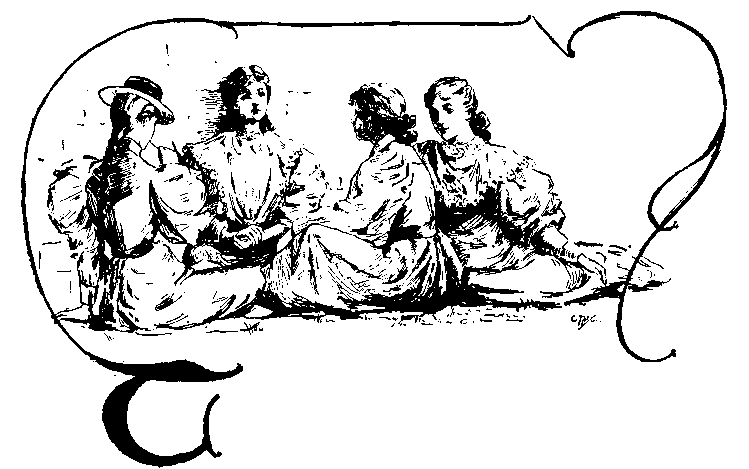
Here, faithful readers, is a poem taken from a newspaper column in the women’s section of an 1890s San Francisco Chronicle title “Behind The Mask” by Nora Perry–an American poet and journalist who wrote for the Chicago Tribune. It is for the lonely ones who know not what they do.
“‘She speaks and smiles the gay old way
She is the same as yesterday,’
You turn and say.
The same as yesterday, before
The dark-winged angel at her door
Entered and bore
The treasure of her life away;
‘The same, the same as yesterday.’
And as you say
These questioning words with questioning tone,
Apart from you and quite alone
She makes her moan;
She does not dare to trust her woe
To break its bonds, her tears to flow
In outward show,
Lest, like a giant in her life,
This woe should rise to stronger life
And fiercer strife.
So, wearing on her face the guise
Of olden smiles, with tearless eyes
She dumbly tries
To lift her burden to the light,
To live by faith and not by sight,
And from the night
Of new despair and wasting grief
At last, at last to find relief
Beyond belief.
Even as she stands before you there
With all the old accustomed air,
The smiles that wear
The mirthful mask of yesterday.
She stands alone and far away
From yesterday.
She stands alone and quite apart,
With mirth and song her aching heart
Has lot nor part.
The while your criticize her air
Of gay repose, pierced with despair
She does not dare
To speak aloud her bitterness,
To tell you of her loneliness
And sore distress.”
Nostos Nic’s Picks: Week of 7/8/2013
Playing Bottom of the Hill: Wednesday, 7/10/2013.
Playing The Hotel Utah: Friday, 7/12/2013.
Playing Bottom of the Hill: Friday, 7/12/2013.
Playing Brick & Mortar Music Hall: Saturday, 7/13/2013.
Playing Bottom of the Hill: Saturday, 7/13/2013.
Playing Cafe Du Nord: Sunday, 7/14/2013.
The Etiquette of the Saloon

From a 1880s San Francisco newspaper: The Etiquette of the Saloon
“George Garer is a barkeeper in an underground saloon on Kearny street, and Gussie Herman is one of the ‘pretty waiter girls’ in the same saloon. On last Thursday night the two became involved in a dispute about one dollar and a half, which he claimed she owed the bar for drinks and he, after calling her some very improper names, slapped her face; after which she ‘went for him,’ pulled his hair, and struck him in the face. She caused his arrest for assault and battery, and yesterday he was tried before the Police Judge and found guilty of the offence [sic] charged. He will appear for sentence tomorrow.”
Current Obsession: Gregory Alan Isakov
I saw Gregory Alan Isakov perform with Blind Pilot at Great American Music Hall many moons ago, and the man blew me away with his ever perfect pitch. It was one of those kismet moments where I’d stumbled across his album The Empty Northern Hemisphere the day before the show, had mental-noted an intent to return to it in earnest later, and then…magically…he was unexpectedly in front of me. Kablewie, a new love was born.
Kismet.
Since that fateful night, Isakov has been a steady companion of mine. The music, not the man (of course). He’s there in the morning as the gears beging to grind when I embark upon my work that draws a wage; he’s there in the dwindling twilight as I sit down to my leather-inset desk, cup of coffee in hand; he’s always there for whatever I need: a shoulder on which to cry, a gentle nudge towards the day, a soft siphon for the day’s agressions as I sink under the covers into sleep. A contemplative, supple soul to unwind a weary one with song.
Beautiful.
Current Obsession: Eleanor Murray
In preparation for the drop of Eleanor Murray’s new album, Bury Me Into the Mtn, on July 18th, I’ve been listening to my all-time favorite song from this talented lady: Street To Ride.
The Whitmanic Joel P. West
One of the best singer songwriters actively working today is Joel P. West, the brain-force behind The Tree Ring. When I say “actively,” I mean it. The man released three albums under his own name from 2007 to 2011, then two albums by way of The Tree Ring in 2011 and 2012 and in his free time he scores films such as I Am Not A Hipster.
It’s no surprise that West has found a home in the realm of film because his music tends toward the hopeful, and all the best films float you from the theater on a current of hope manifesting as meditation, inspiration, or maybe merely a suspension of the everyday drudgery; this is the power of possibility. Images without sound are powerful but moving images set to music are affecting because music transforms mere images into life imagined in tandem to life as it is lived, and parallelism is enthralling since the two points (the real and the imagined) by definition can never meet. They are parallel. Thus, art is created from the force of the question, “But what if that’s not true? What if I can make what I want to see real?” This is the essence of hope, the great chameleon whose meaning changes with the scenery—that liquid gold that Barack Obama bottled and sold to us all on his way to the presidency, the thing that is a filmmaker’s Ace in hand and a musician’s magic potion.
But hope is not just a tactic, it is a fragile force that drives us to know the next day, the day after that and so forth until we’re able to see into future space, beyond the moments we need to conquer just to survive and onto the ones that will set the tone for years down the line. This is planning, a derivative of scheming also known as the fruit of schematics set down with intent—a transparent overlay of guidance points that keep us moving, not always forward but ever in motion. Therefore, hope is built upon motion that breeds results. Music and movies are the same. Hope offers a respite, a place to lose oneself in the possible. Music and movies do the same. Hope is most useful in steady doses, not the erratic peaks that plaque artificial stimulants. Likewise, music and movies emote best when a vision unfolds slowly with direction, wrought from craft and not happenstance. The difference between an album defined by one radio friendly hit that dominated one summer and Abbey Road, the difference between Shawshank Redemption and Happy Gilmore, is depth. True musicianship spawns a comprehensive, multilayered production that releases slowly and stays fresher longer. One hit wonders melt in your mouth quickly and are devoured, but everlasting albums—the ones that may have gotten short shrift at first in the shadow of a flashier wunderkind—provide the longevity so essential to fermentation. Because things taste better when they’ve aged—just like steak and wine and whiskey. And what is fermentation but the hope that the tasty thing you have in hand will be better if you watch and wait in an environment of your own design?
While fermentation may have fallen pray to instant gratification, Joel P. West is not interested in the fleeting or the superficial. As a counter-balance, West creates music that is full-bodied and optimistic. His ability to stand apart from a soundscape littered with superfluous noise lies in his ability to craft albums. Not just songs, but albums that beg to be listened to from first to last. In accomplishing this, he is able to restore a totality to music listening that has been fragmented by an iTunes-loving world that has divorced songs from the aura of the album. Perhaps this ability is an extension of his composition work in film. Songs beget songs on his 2012 opus Brushbloom, just as scenes beget scenes in film, on a journey to that final climax that justifies your emotional investment. He not only creates music, he masters atmosphere. The cover art features desert shrubbery West recalled from a camping trip or something and hunted down, at dawn, so he could photograph it in the perfect light for the perfect metaphoric ambience, for Christ’s sake. This is what a painstaking attention to detail motivated by an incredibly thorough vision will produce. To further explore the totality of Brushbloom, let’s look at the song “Shoulder Season,” shall we?
It begins with a softly plodding beat that could be the soundtrack for a nature flick about the growing cycles of daisies (in a good way). That beat is joined by a crisp yet warm guitar, and then it breaks: “Even these trees are huddled tightly in the sharpness of the morning.” But their apples are rotten, their arms sun-starved, and the sounds from his mouth so loud. Here we are, the stage is set: it’s morning and our hero has a tale to tell. West describes a stubborn gracious, earth; he breathes deep. This is when he finds his Whitmanic yawp and the tempo quickens into a refrain that speaks of cold air and is driven by shakers that give way to that same soft beat which opened the track. Then, without warning, we have our new spring with soft new things on its way. Here is our direction and we are no longer alone, surrounded instead by the vivid ghosts of swelling instrumentals—present yet spectral. With our balance underfoot, the story has reached its zenith and the music has summited. Here, West admits, times are harder but we’ve taken flight so, worry not: if we are sustained then we alive, left with an endowment of hope.
If good music gives gravity to images and great music conjures images from the blank canvas of your brain, then lasting music, music like that which is made by Joel P. West, draws meaning into quiet moments with invigorating bliss, compelling you into different territory, onto new tangents. Brushbloom gives context by placing the listener in an atmosphere of simple imagery and understanding, thereby outlining the possible. In this respect West’s music is cinematic in scope and breadth using lyrics which mimic the music in an expertly choreographed dance that can be experienced again, and again, and again without fatigue. Whether for hire, for film or for his own musical persuasions, Joel P. West is a poet with a purpose and a vision too enthralling to bypass.
Men Seldom Make Passes

The perk of being an archivist and historian to pay the bills is the cultural ephemera I scan daily. At one point in our great nation’s history, sexism and racism were ubiquitous and, as such, invisible. Being a woman of the late 20th- and early 21st-centuries, I was raised in classroom curriculum that bent over backwards to equalize gender in a way that basically skewed it the opposite as so much focus was placed on girls. Do they feel comfortable enough to raise their hands and speak in class? Are gym activities gender neutral so girls don’t feel inferior? You get the picture.
They also spent a significant amount of time educating us about AIDS; they were very, very concerned we were all going to get AIDS. Fourth graders? Getting AIDS? But that’s another discussion for another time.
This over-equal ideological footing may be why I’m able to see the humor in our nation’s past indiscretions, you know, in a “Yes, I smoked pot but I didn’t inhale” and not a “No, I did not have sexual relations with that woman” sense. Meaning, if we can’t laugh at uncomfortable situations that are largely absurd (sexism and racism have no scientific evidence, making them absurd) then what else are we supposed to do, right? As long as it’s merely absurd, like claiming to have smoked pot but not inhaled as opposed to sexually manipulating a young intern with the power of the presidency. See the difference? Good, we’re on the same page.
In the spirit of I-shall-become-stronger-by-owning-the-negative and using it for a positive charge, I therefore find blatantly sexist “news” articles from the 1940s chuckle-worthy. This is especially true when they’re titled “‘Men Seldom Make Passes–‘: Blonde Wins Beauty Contest for Girls Who Wear Glasses”. That’s right, ladies, if you wore glasses in the 1940s you were a segregated minority on top of being a segregated minority. What followed is as follows:
“Vera Parks, a far-sighted blonde, today won first prize in a beauty contest for girls who wear glasses. She had on a pair of octagon-tops with coral mountings which set her back 18 bucks three years ago. The contest took place in the Hotel Piccadilly and was sponsored by the Community Opticians Association, an organization which wants to prove that Dorothy Parker didn’t know what she was talking about when she wrote: ‘Men seldom make passes, at girls who wear glasses.’
‘Anybody ever make a pass at you?’ the winner was asked as she relaxed with a scotch and soda. ‘Naturally,’ she said, ‘my husband.’
Mrs. Parks immediately began planning her trip to Hollywood, which is the prize she receives. She wants to go to a premiere out there and see Claudette Colbert and Ronald Coleman.”
Isn’t that cute? She dreams of Claudette Colbert while sipping a scotch and soda by her husband’s side. She may wear glasses, but she’s still the picture of wifely femininity: simple, sweetly involved in her silver screen stories and liquored up. Yay for the 1940s!
A Clueless Moment
The movie Clueless was a formative experience in my burgeoning adulthood. I had the fuzzy pen, the satin mini skirts and and was obsessed with Jane Austen so I perfectly understood what motivated the Cher / Emma character in a literary-teenage way. “As If” bumper stickers that the movie inspired aside, Clueless promoted some solid ideals: avoiding judgement based on appearances, LGBT acceptance, and, of course, doing good stuff for other people in Pismo Beach who may have lost everything in a disaster, even their winter sports equipment.
If you’re also a fan of the movie, you’ll enjoy this Buzzfeed quiz Which “Clueless” Character Are You? Not only was it the perfect way to unwind after a long day at work, like when you pee your pants laughing after your manfriend comes up as Tai (hypothetically), but it also kicked off a Cranberries listening excursion that entertained me for most of the next day. That is called double winning.
Current Obsession: Emily Jane White
And you know I’m evil now, and you shout it loud and proud.
Sayin’, “Born in the U.S.A.”
 Nostos Algos